Our Location
5th Floor, Huake Center, Lanshan District, Linyi City, Shandong Province, China

5th Floor, Huake Center, Lanshan District, Linyi City, Shandong Province, China
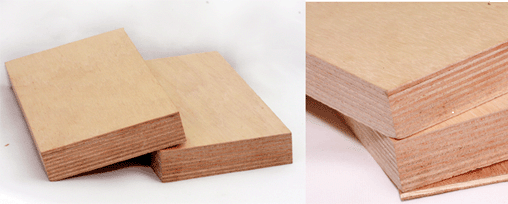
The sheathing rack holds two structural sheets that cover the same wall and the same deck, and the plywood osb choice follows the span rating, the moisture exposure, and the budget on the drawing. Plywood layers the veneers while OSB orients the strands, and both panels carry the sheathing load with their own behaviours at the edge and the wet zone. This guide compares the two sheets on construction, the structural rating, the moisture, and the cost, so the build takes the panel it needs.
The plywood sheet builds from the cross-laid veneers glued into the layered panel, while the OSB sheet orients the long wood strands in the crossed layers and presses them with the resin into the dense board. The construction sets the strength pattern and the edge behaviour that the sheathing takes. Read the build and the comparison follows.
The plywood layers run the grain across in each veneer, giving the sheet the strength in both directions and the clean edge that the joinery and the fastener line take. The layering carries the screw threads and the shear load across the full thickness. That construction serves the sheathing that takes the fastener work.
The OSB orients the strands in the crossed layers, giving the board the structural rating at the lower material cost, and the panel covers the large sheathing areas at the trade rate. The strand edge chips under the handling and the board swells at the cut line under the continuous moisture. That behaviour sets the OSB into the sheathing class.
Both panels carry the span rating stamped on the sheet, and the rating sets the joist or the stud spacing the panel bridges without the sag. The plywood and the OSB reach similar ratings at the common thicknesses, so the span alone rarely decides the panel. Read the stamp and the exposure together.
The wall sheathing takes either panel at the rated thickness, with the plywood holding the fastener line cleanly and the OSB covering the large area at the lower rate. The roof deck takes the rated panel with the exposure bond that the covering protects. Match the span rating to the framing spacing.
The floor deck takes the rated panel with the stiffness that the live load needs, and the plywood edge holds the fastener at the joist line while the OSB spans at the trade rate. The glued and screwed tongue and groove edges close the deck seams. Read the live load against the span stamp.
The exterior-bonded plywood holds the damp at the cut edge, while the OSB swells at the exposed strand line under the standing water that the open deck meets. The wet exposure and the long open-air schedule take the plywood; the covered sheathing takes either panel at the rated bond. The exposure decides the sheet.
The deck that sits under the weather and the wall that stays open through the build take the exterior plywood because the strand edge of the OSB swells under the standing water. Cover the OSB quickly when it serves the exposed schedule. The moisture plan decides the panel.
Seal the cut edges of both panels where the exposure reaches the core, because the plywood veneer and the OSB strand both drink the water at the open line. The sealed edge keeps the panel stable through the wet weeks of the build. Treat the edge as part of the fixing schedule.
The OSB prices below the plywood on the common sheathing thicknesses because the strand core uses the smaller timber, and the saving scales across a full house of sheathing. The plywood premium buys the clean edge, the fastener grip, and the moisture behaviour that the wet schedule needs. Read the exposure and the budget together.
The covered wall sheathing, the protected roof deck under the covering, and the subfloor that takes the finish take the OSB at the lower sheet rate, and the span rating carries the same load at the common thicknesses. The saving lands across the large covered areas of the build. Keep the OSB under the covering.
The open deck, the long-exposure schedule, and the fastener-heavy edge take the plywood because the swelling and the chipped strand edge cost the rebuild that the panel saving cannot cover. The premium buys the wet behaviour. Read the exposure first and the price follows.
The plywood takes the fastener line cleanly at the edge, while the OSB needs the screw set in from the field to stop the strand edge chipping under the head. Both sheets fix to the framing with the rated nails or screws at the code spacing. Handle the sheets flat so the stack stays true.
Set the plywood fasteners at the panel edge onto the framing with the full thread bite, and keep the OSB fasteners off the chipped strand line where the head crushes the strands. The pattern follows the framing rather than a fixed count per sheet. An even line keeps the seam closed.
Keep both panels flat on the level bearers in the covered storage so the sheets stay true before the install, because a warped sheathing sheet fights the framing line. Support the stack across the full sheet rather than the edges alone. The flat panel fixes flat and the wall reads true.
The sheathing decision runs the span stamp, the exposure schedule, and the budget line, because each panel serves the class its construction allows. The covered wall takes the OSB rate, the wet deck takes the plywood edge, and the floor deck reads the live load first. Match the sheet to the exposure and the span.
A build that closes the sheathing quickly under the wrapping and the covering takes the OSB at the trade rate without the wet exposure reaching the strand line. The covered schedule keeps the board stable for the life of the wall. Close the envelope and the OSB holds.
A build that leaves the sheathing open through the wet weeks takes the exterior plywood because the veneer edge holds the moisture that swells the strand board. The open schedule costs the premium and saves the rebuild. Read the programme before the sheets are ordered.
These are the questions builders ask most when they compare plywood and OSB.
Plywood layers the cross-laid veneers while OSB orients the wood strands in the pressed layers. Both carry the stamped span rating, and they differ at the cut edge under the moisture.
At the common sheathing thicknesses, both reach similar span ratings for the wall and the roof deck. The plywood holds the fastener edge cleanly and the OSB covers the large area at the lower rate.
The covered roof deck takes either rated panel, while the deck with the long open exposure takes the exterior plywood for the edge behaviour. Match the sheet to the covering schedule.
The OSB prices below the plywood on the common sheathing thicknesses, and the saving scales across a full house of sheathing. The plywood premium buys the wet behaviour and the clean fastener edge.
The OSB swells at the cut strand edge under the standing water, so the covered schedule and the sealed edge keep the board stable. The open deck and the long exposure take the exterior plywood instead.
Set the span stamp, the exposure programme, and the budget line against each sheet, and the sheathing choice follows the job rather than the price sticker alone. The covered wall takes the OSB rate and the wet deck takes the plywood edge. When the build needs the structural sheets rated for the span, HYY supplies plywood and OSB with the span rating and the bond stamped on every sheet, and the OSB Board and Commercial Plywood pages show the structural panels for the wall, the roof, and the deck. The complete plywood product range backs the sheathing order before the frame is raised.