Our Location
5th Floor, Huake Center, Lanshan District, Linyi City, Shandong Province, China

5th Floor, Huake Center, Lanshan District, Linyi City, Shandong Province, China
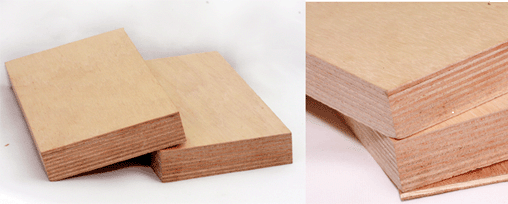
The thin sheet that hides under the floor finish and behind the cabinet back is plywood luan, the lightweight underlayment panel that closes a surface without the weight of the structural sheet. The soft tropical veneer keeps the panel light and easy to cut, and the thin profile suits the backing work that never carries the main load. This guide covers what luan is, where the panel works, its thicknesses and limits, and how to choose and finish it for the project.
Luan plywood is built from the thin veneers of the tropical lauan species, pressed into the lightweight panel that the trade uses for underlayment, backing, and the craft work. The soft core keeps the sheet light and the fine veneer takes the thin profile that the backing work needs. The panel reads as the utility sheet rather than the structural one.
The lauan veneer comes from the tropical hardwood group, with the soft, even grain that presses into the thin, light panel. The fine face takes the paint and the thin finish without the heavy sanding the denser plywoods need. That soft face is the character that defines the panel.
The soft core keeps the sheet light enough to carry alone and easy to cut with the utility knife on the thin profiles. The light weight suits the ceiling backing and the cabinet rear where the heavy panel fights the installer. The panel trades the structural strength for the handling ease.
The luan panel earns its place in the backing and underlayment work: the floor underlay beneath the finish, the cabinet back, the ceiling backing, and the craft panel that takes the thin paint. The panel closes the surface and levels the substrate without the cost of the structural sheet. Read the load first, because luan serves the covered work.
The luan underlay levels the subfloor beneath the vinyl, the laminate, and the thin floor finish, with the smooth face giving the covering a flat bed. The panel staples or glues to the subfloor and hides under the finished floor for the life of the build. Confirm the subfloor condition before the underlay goes down.
The cabinet back, the drawer bottom, and the ceiling backing take the luan sheet because the thin panel closes the surface without the weight of the structural grade. The craft work takes the soft face for the paint and the cutout. The backing panel disappears behind the structure the moment it is fixed.
Luan comes in the thin profiles that the underlayment trade calls for, and each thickness serves the span and the covering it carries. The thin sheets suit the flat substrate work and the light backing, while the thicker luan takes the slightly longer span. Match the thickness to the substrate and the load.
The underlayment luan runs in the thin profiles that the floor finish and the backing work specify, and the panel cuts clean with the utility knife or the fine-tooth saw. The thin sheet staples flat to the substrate and takes the covering without the telegraph. Set the thickness to the covering manufacturer requirement.
The thin luan flexes over the open span, so the panel needs the continuous substrate beneath it rather than the joist bridge of the structural sheet. The flex is acceptable under the floor covering and not on the open deck. Read the substrate condition before the panel is specified.
The luan panel and the structural sheet serve different jobs: the soft, light luan closes the covered surface while the bonded, void-free structural panel carries the load and the moisture. The luan trades the strength for the weight and the price, and the structural sheet earns its keep where the exposure and the span demand it. Match the panel to the job class.
The soft luan core grips the staple and the light fastener but strips under the structural screw that the dense core of the structural panel holds. Joinery and load work take the structural sheet; the backing work takes luan. Read the fastener demand before the panel is chosen.
The soft core of the luan swells under the continuous moisture that the exterior-bonded structural panel holds, so the wet zone takes the structural sheet rather than the underlayment. Keep luan in the dry, covered positions where the moisture never reaches the core. The exposure decides the panel class.
The luan order runs the substrate check, the thickness match, and the face inspection, and the finished panel takes the paint or the covering that the project calls for. Seal the cut edges and prime the soft face before the finish so the panel stays even under the coat. The finish follows the covering above it.
Sight the luan for the flatness and check the face for the patches that telegraph through the thin covering, because the soft veneer takes the dents easily in handling. Keep the sheets flat in the covered storage so the underlay stays true through the weeks before the install. Reject the warped sheet at the delivery rather than at the staple gun.
Prime the soft face before the paint so the grain does not drink the first coat and leave the patchy film, and seal the cut edges against the moisture of the room. The primed luan takes the finish evenly and stays flat under the covering. Treat the edges as part of the finish schedule.
The luan build fails when the soft panel takes the structural load, the wet zone swells the core, and the unprimed face drinks the paint. Each mistake goes back to the job class rather than the workmanship. Match the panel to the backing work and the substrate stays flat.
A luan sheet across the open span flexes under the foot and never holds the flat line the floor needs, so the continuous substrate carries the panel. Swap the structural sheet in wherever the load and the span demand it. The right panel class keeps the floor flat.
An unsealed luan edge at the damp substrate swells the soft core and telegraphs through the covering, so the dry position and the sealed edge carry the panel. Keep luan away from the wet zones and the exterior bond serves them instead. The moisture plan decides the life of the underlay.
These are the questions buyers ask most with plywood luan.
Luan serves the floor underlayment, the cabinet backs, the ceiling backing, and the craft panel, where the thin, light sheet closes the covered surface. The soft core suits the backing work rather than the structural load.
Luan is a plywood built from the tropical lauan veneers, pressed into the thin, lightweight panel. It shares the layered construction while trading the structural core for the handling ease.
Luan works as the underlayment over the sound subfloor rather than the structural subfloor itself. The thin panel levels the surface beneath the floor finish.
Luan comes in the thin profiles the underlayment trade calls for, matched to the covering manufacturer requirement. Set the thickness to the substrate and the covering above it.
The soft core swells under the continuous moisture, so luan stays in the dry, covered positions. The wet zone takes the exterior-bonded structural panel instead.
Match the luan to the backing work, keep it in the dry position, and prime the soft face before the finish, and the underlay stays flat under the covering for the years. The thin panel closes the surface without the weight of the structural sheet. When the project needs the underlayment panel cut and graded for the substrate, HYY supplies lightweight and structural panels across the range, and the Commercial Plywood and MDF Board pages show the panels for the backing and the substrate work. The complete plywood product range backs the order before the covering arrives.